Saturday, 1 February 2020

Pottery and Crockery

This page has a list of a variety of pottery and crockery that would have been found in the Melbourne Area. Some of them are quite modern, whilst others date back to early colonial times, and some come all the way from China.
Royal Worcester Porcelain
England 1920s

Milk Jug
England 1900s

Candle Holder
1810

Rice Bowl
China 1990s

Chinese TeaCup
England 1900s

Cup
1940s

Modern Plate
2000s

Plate
England 1850s

Friday, 31 January 2020

Prehistoric Artifacts

The artifacts below are considered prehistoric, because they come from a time where there is very little evidence of written historical data. The artefacts you may find in Findon Forest are not actually real, they have been Knapped by University Students to practice the skill of creating Artifacts.

Stone Axe

Flint Artifacts - approximately 20000 Years Old

The way Flint Artifacts are 'Knapped'

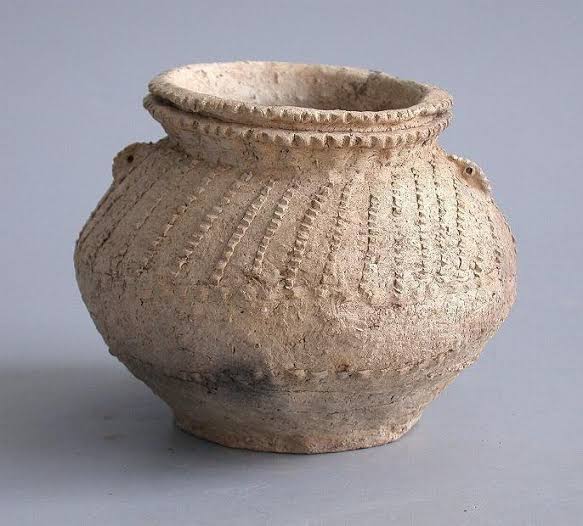
A Neolithic piece of pottery (10000 years Old - Not Australian)

A stone artifact - Made from Quartz (perhaps 10000 years old)

Stone Tools called "Bondi Points" - approx 5000Years Old

Early European Artifacts

Below are some of the artifacts you'll find in Findon Forest that are evidence of early European settlement in the Melbourne Region.
Dicey & Co. Elixer Bottle -  1900s

Indigenous Artefact made from glass from 1800s in the Kimberley area

Potter Bottles from Early 1800s

1803 - Belt Buckle used by early settlers

Pipe - 1800s

A Tasmanian 1 Pound Coin - 1803

1860s - Shot Gun Shells

Modern Artifacts


ANZAC Belt Buckle - 1940s
Below are some of the more modern artifacts you have found in the Findon Forest during your exploration. You may also come across various pieces in Litter that has been left or blown into the forest... often this litter can tell us a story.
Early (1910) belt buckle used by farmers
A 1980s Milk Bottle
1971 20cent coin


1920 Penny


1960s Milk Bottle

2010 - Harley Davidson Belt Buckle


Friday, 6 May 2016

Mixing it up!

So today I worked with the fantastic sustainability leaders at Findon Primary School. The 6 students from grade 5 & 6 have all demonstrated great leadership strengths. Today's session highlighted that, without any huge effort on my part, the team is focused on working collaborative to achieve their goals. The main goal at this stage is ensuring that the Rubbish Free Friday data is collected. This involves:

  • Going to all classes during recess eating time and recording who came to school rubbish free. 
  • Bringing that data back to our lunchtime meeting to be collated
  • Determining the two winners for this week (raffle) 
  • Writing the speech for the assembly presentation at 2.30pm. 
I have been really impressed with this years leaders ability to get all this done in a collaborative, timely manner, so that we can spend our meeting time discussing our action projects for the term/year. 
This weeks action was the creation of a Mix. 

For those that don't know, Mix is an add-on for Microsoft Powerpoint, which can be downloaded and added to the ribbon (tool bar) in power point. When you click on the Mix button, you can add video, audio and other effects into your power point and you can also export your Mix as a video. 

So this is a brilliant tool for engaging students in a technology rich lesson, extending the concept of a powerpoint into something they can add to a blog, Youtube or school website. 

This mix, produced by the leaders is about a rubbish free lunch box - the students are going to use it to promote Rubbish Free Friday. 


Thursday, 28 April 2016

We're off to the Museum...

Diprotodon - Victoria's Megafauna
Today I had the privileged of joining Learning Team 3 from Findon Primary School on a visit to the Melbourne Museum. Whilst I had attended an excursion a couple of times in the past, this was the first one that involved visiting a specific venue.

The Museum had things down pat - they had things figure out and their systems and processes enabled a fairly stress free day for the teachers (apart from trying to supervise 5 classes of grade three students:)). The visit gave me some great ideas for how to improve some of the processes we have in place at the Wildlife Sanctuary.

Students on the Forest Walk
The students had a great time exploring all the exhibits from the Melbourne Gallery, were students explore Mellbourne's history, including an old shack and Phar Lap, to the Forest Gallery, where live exhibits engaged students in understanding frogs, lizards and forest plants, to the Science and Life Gallery where evolution, dinosaurs and wildlife were on display.

Something I noticed was the way in which students engaged with the technology in various exhibits. Whilst interpretation experts would tout their educational benefit, I noticed in so

Students exploring the Dinosaur exhibit

me exhibits that this was a very surface level of education and in fact bordered on students being more engaged with the interactivity than the information presented. One particular instance was when students were fighting over looking at a virtual display of animals. pressing screen images that would provide information about the animals - at no point did students pay any attention to the content, even when it directly linked to questions in their worksheets (they had to have the exact section of information pointed out to them). At this time I asked the students what they were looking at - they explained - 'just random animals'. They were amazed and excited, when I pointed out the animals on display (above the screen) and were then actively engaged in looking at what was around them - rather than the screen. I feel if the screen wasn't there, they'd have had a more interactive learning experience.

Tuesday, 5 April 2016

Findon Primary School

I'm pretty lucky to be able to work with the students at Findon Primary School. Over the last few years I've been able to do some of my teaching placements and work with great teachers and students on sustainability projects. Mr Fromm, who is a great teacher and mentor, has provided me with great opportunities to work with his students and the sustainability leaders since 2012.

Paula, Linda, Daniel and the whole team at Findon have welcomed and supported me through a journey that has had many challenges and not only have they encouraged me to explore and refine my teaching skills, they have also made me feel like I belong as part of the team.

The students at Findon are also fantastic! I can see they are excited when I visit and keen to run up and talk. Having been involved for some time it is really great to see their growth.

In 2016, I've become kind of a scientist in residence at the school. This involves developing lessons around the various learning teams inquiry units and then working with classes to deliver these lessons. This has been another great opportunity to practice my teaching skills and also develop some really interesting lessons that tie in with the Masters research project.

Working with Findon on this project has really provided insight into my teaching practice, where my strengths lie, where I can improve and it has reinforced my thoughts around what interests me with regard to student learning.

What I am discovering is that I have a real passion for engaging students in inquiry based lessons, that enable them to take control of their own learning pathway. I am still much more of a 'sage' style teacher, but with intent to change this through my teaching practice into more of a facilitator of learning.

Thursday, 24 March 2016

Science in the Bush

For some years we have been offering an experience that provides students with an insight into some of the scientific processes we use to understand ecosystems. In 2016 we have renamed this experience Science in the Bush. Essentially this is a version of the Minibeasts Wonderland experience, except with more specific data collection outcomes, aimed at students in years 7-10.

There are three main activities:

Aquatic Sampling

In small teams students take samples of the aquatic invertebrates in Fozzies wetland, the highlight of this activity is being able to go right out into the wetland with a pair of waders on. Students are able to apply a scientific method for catching invertebrates to ensure that the sample is consistent with other groups sampling.

Terrestrial Sampling

Students use quadrats to determine the presence and abundance of terrestrial invertebrates in a given area (1m x 1m).  In this session I incorporated 'Graphically Grubs' as a way of creaing their data on site.

Identification and Analysis

Back in the Learning Centre we use dissection microscopes to identify and quantify the animals that have been caught in each environment and use this to form a discussion around the health and diversity of a woodland ecosystem.


First Run for 2016

The students from a school just up the road from the sanctuary attended the session today. There was fantastic bunch of eager grade 7 students keen to jump into the wetland (after a bit of encouragement) and get their sample of invertebrates. It did take a little to warm the students to the ideas of engaging with nature, most being preoccupied with cleanliness and fairly sterile environments, so this place with bugs and mud and where 'anything can happen' may have left them a bit concerned.

Once the students got past this, however, they really engaged and worked well in their teams to collect and analyse there samples.

The invertebrate ID session that I was working on previously, worked really well with this group and asking them why they made a particular conclusion really allowed them to critically engage with the topic. In the Terrestrial session I found two students having a rigorous discussion about their animals and using markers on the worksheets to describe how they had determined what animal it was - this was some great evidence of Creative and Critical Thinking.

Wednesday, 23 March 2016

Maths in the Bush


PSTs on Fozzies Boardwalk
One of the cool things I get to do is work with Pre-Service Teachers (PSTs) who are studying at La Trobe either in the Bachelor of Education or the Masters of Teaching courses. We run a number of professional development style workshops to give exposure to education in a place-based context.

This session, developed as part of the Maths Methods subject coordinated by Pete Sanders, is called Maths in the Bush. It enables the PSTs to see the mathematical outcomes that can be reinforced by using an outdoor (bush) environment... I run it as a way of encouraging teachers to get out of the classroom and enjoy their broader school or community environment. Connecting kids with nature and getting some great mathematical outcomes in an authentic context.

In conjunction with the Masters research I am undertaking, I took this year's session as an opportunity to revisit the session and develop new lesson content that will provide additional resources for future teachers to use the activities as a base for their planning. It also give us an opportunity to articulate a new experience for schools to come to the sanctuary and engage with our educational expertise.

The activities are as follows:


Catch me if you can

This activity is similar to the dip netting activity previously discussed. Students use a net and bucket to collect a variety of aquatic invertebrates from the Rod Fosters (Fozzies) Wetland. Students use Q Cards to identify the animals and then use their wetland sample to determine: Presence, Absence and Abundance of the animals caught. The data collected from this provides great mathematical outcomes (eg Counting, Shapes, Place Value, Graphs). Much of the mathematical outcomes come from what you can do with the data back at school.

Find that Frog

Find that frog is a simple triangulation game. Students position themselves in three points (rough triangle) around a fairly large area (like a school soccer pitch) and they close there eyes (or are blind folded) and I run and hide an Bluetooth speaker (AKA Frog noise) somewhere (you need several 'dummy frogs'). Students then try and point in the direction of the noise - theoretically the frog is located at the spot where their pointing intersects.

I did this in the sanctuary and hid the frog among some leaf litter. It worked really well and students were able to see a great practical application of triangulation.

Graphically Grubs

This activity is a great activity that extends the 'Rock n Roll' activity we often do in the sanctuary, where students roll over logs and rocks and collect the invertebrates they find. In this activity students get 1 or 2 small petri dishes to catch their 'bugs' and each bug must be kept in a separate petri dish. As students collect the animals, they are encouraged to work in teams of 4 to create categories of animals and then build piles of animals in these categories. Students can then draw their graph of the piles or take a picture with a tablet.

Some examples of categories:

Number of legs - 0, 6, 8, 10, many
Animal Types - Insects, Worms, Arthropods
Animal names - Beetle, Spider, Slater, Ant, Worm

On the first run of this activity I found students really engaged in discussing ways of classifying animals and then creating their physical graphs on the ID chart. It was a really good activity for promoting collaboration and critical thinking skills.

Nesting Box Game

Another of my favourite activities for promoting collaboration, creativity and critical thinking. Student in this activity are provided a box full of wooden parts to a nesting box. They are asked to collect 6 pieces (any pieces) and try to create a box for an animal. A few minutes in, I tend to point out that I 'forgot' to mention that you need to collect 6 bits of wood with the same letters on them - thus forcing students into a process of negotiating for parts from other teams. Once teams have successfully completed a box, we then talk about the different types of habitats for different animals, and why these boxes are so important.

These boxes, called nesting boxes are great habitat for a range of animals and are required to replace the hollows that would have existed in old (150Y+) River Red Gums (eucalyptus camaldulensis)


Tree Heights

A great activity for outdoor maths is estimating and calculating tree heights In this activity we demonstrate 6 different ways of estimating height of a tree, each one being more accurate than the next. Once a quick demonstration of the methods is conducted, students then explore the methods and determine which is the most accurate and then gain a consensus on the height of a particular tree.

Here's a worksheet that explains the methods. 

Wednesday, 16 March 2016

Pinball & Creativity

A week after my lesson on simple machines I visit the school where I did the Pinball Machine lesson and discovered that some students had taken my ideas and created their own pinball's at home. Here's a couple that I took a couple of shots of.

What I find really encouraging about this is that the students have added things to the concept, which is ideally what we'd be looking for in  the development of 21st Century Learning Skills. It denotes critical thinking, creativity and innovation.

In these pictures you can see the students have added score boards and a scoring system and one student has created a more elaborate paddle system that is more authentic to a proper pinball machine.

Friday, 11 March 2016

Wildlife CSI - First Run

Ok, so this was the first multi group session in the Sanctuary for the year. I also had spent a lot of time incorporating activities that would develop collaborative and critical thinking skills in students, in line with the NPDL Framework we've been trialing. The Wildlife CSI experience has needed some work in this space for some time, so it was good to spend the time and end up with a new experience (although it really needs an App, so kids aren’t using workbooks).

I had develop the session so that students would work in a small team of CSI agents, and work through the 6 steps of the scientific process. The workbook we developed encouraged students to look at the crime scene and document the evidence that could tell a story. There were three activities in the session (click for lesson plan)–

The Story


Hi Ho... a 'Sciencing' we'll go... 

The start of this session was in the Learning Centre where I  introduced students to the day and ran through both the scientific process and the collaborative learning process. I asked critical questions about what working in teams involves. 

  • What do you need others to do when you're working together? 
  • How do you feel when working in a group? 
  • What are our expectations about working together? 


Students were excited that they were about to become CSI Agents. They were excited to put on lab coats and CSI agent badges

The Wildlife CSI activity worked well, most groups were working together to capture evidence and using the identification booklets. A quick demonstration of how to 'capture' evidence the the tablets and off they went. Students were certainly engaged… Often student would come 'bounding' up to me to show me what they'd found. Here's the teachable moment, when we can ask inquiry based questions to develop their critical thinking skills and incorporate scientific language into their vocabulary. 

The evidence session was great – students were really engaged in looking at the evidence and using microscopes. I was working my way around the room and ensuring students were able to use the equipment. Again, they were visibly excited about looking at the evidence and adding content to their workbooks - This surprised me because I normally steer clear of workbooks because I want students to engage with whats around them - but in this circumstance it really added to the exploration of the content. 

Creating stories from the Evidence
In terms of collaboration and teamwork the last session was great. Students were actively investigating their evidence on their tablets and then using this to create their story on the template. I think the session worked really well and was able to reinforce the learning outcomes. Ideally we would provide an opportunity for all teams to share their story, but time was short so we only did 2.

All in all, a great first run of a session I've had in my head for many years, that I've never really had the time to put together properly... with a few more tweeks (and possibly the development of an App) I think it will be the way I'd originally pictured it and a really great experience for students to engage with the scientific method.

More details about the Wildlife CSI experience - Here

Thursday, 10 March 2016

Wildlife CSI


The Scientific Method


Have you ever wondered about unique ways of developing students understanding about the scientific method? Some years ago I was on my couch watching the Crime Scene Investigation (CSI) show and realized that the standard format of the show was the Scientific Method.
So, I had this brainwave of an idea to create an experience at the Wildlife Sanctuary - Wildlife CSI was born.

In the 2016 version of Wildlife CSI we looked over the NPDL Framework to incorporate ways that the session could incorporate opportunities for students to practice communication, collaboration and critical thinking skills into the activities. Three sessions were developed.

See a reflection of the first run of Wildlife CSI - Here

The Crime Scene

In this activity students work in small teams (4-5) and enter a crime scene filled with evidence. They are not allowed in unless they have their CSI agent badge, their lab coats and their CSI toolkit. 

The crime scene is roped off and a range of scats, tracks, animal bones, chalk outlines, taxydermmy and historical artefcats are distributed around a bushland scene. 

Teams of CSI agents move in and capture (digitally) the evidence they find. Each peice of evidence has a unique evidence number so the students can refre to it later. On their worksheets, students document their evidence numbers with a short description so it ensures no evidence is lost. 

The Evidence

Possum Scats
Back in the lab, students investigate the evidence they have found using identification booklets, microscopes and a range of other tools that help them identify and start hypothesising what the evidence means. In their workbooks students start documenting their ideas and linking these to the evidence they have collected.

The story

Finally the CSI agents gather together in the final 'scene' - the presentation room where they work on their stories and collate their evidence into an evidence logbook that tells the progression of their crime scene story. In this activity students work in their teams and critically discuss the evidence and what they conclude is a likely scenario.. students are working collaborative to critically analyse their thoughts and develop a logical argument for their crime. 
Kangaroo Hip
The important part of this process is that there is no prescribed crime - there are a number of possibilities that we introduce through the experience, but it's really up to the students creativity, imagination and ensuring that their thoughts link to the evidence collected. 

As a final step in the process each team presents their theory to the whole class. 

Developers notes: The session outlines, activity sheets and resources have been a collaborative effort between AndyEducate and Natalie Burley. 

Resources